


What this guide will help you decide
Do you want to know how long your baby can safely sleep in a bedside crib in the UK — and when to move them to a cot or their own room? This guide helps you make that choice with practical advice.
You’ll find: what a bedside crib is, types, benefits and how UK families use them; essential UK safety guidance and trusted sources (NHS, Lullaby Trust, British Standards); typical manufacturer limits and label guidance; simple signs your baby is ready to move; and tips to extend safe use or consider alternatives.
Includes UK-relevant product examples and shop pointers (John Lewis, Argos, Mothercare). Use this to make a safe decision for family.
How Much Should My Baby Nap and Sleep in the First Year?
What a bedside crib is — types, benefits and how they’re used in UK homes
What people mean by “bedside crib”
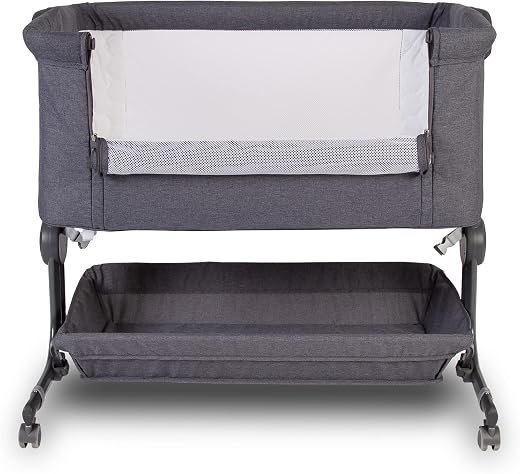
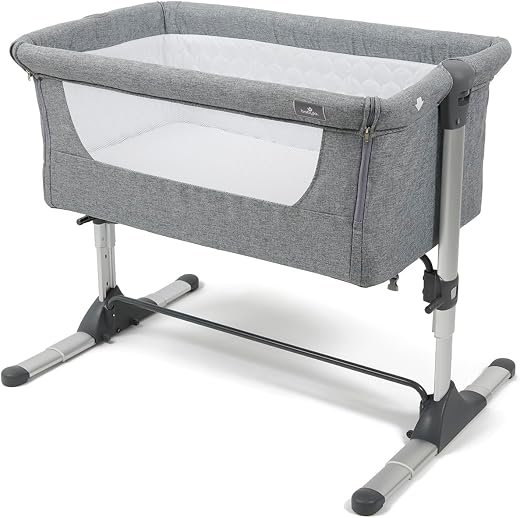
When someone says “bedside crib” in the UK they usually mean a small sleeping unit designed to sit right next to your bed so your baby is within arm’s reach. You might hear it called an attachable co‑sleeper, sidecar, or a bassinet‑style bedside sleeper — they all aim to make night feeds, checks and closeness easier in the early months.
Common types and how they attach
How they attach: most models use adjustable straps that clip under and around the adult mattress or bed frame. Height adjustments help align the top of the crib with your mattress. Important: not every bedside crib will fit every bed type (divans, very thick mattresses, adjustable/orthopaedic beds need checking).
Pros and cons — how it fits your day-to-day
Pros:
Cons:
Where to look and a couple of models to spot
You’ll find bedside cribs at John Lewis, Argos, Mamas & Papas, Mothercare online, Amazon UK and specialist baby shops. Look out for popular examples like the Chicco Next2Me and the SnüzPod — these give you an idea of features (height adjustment, mesh sides, secure straps) to compare on the shop floor.
Next up: the safety essentials and UK guidance you should follow so you know exactly what to check before you first use one.
Safety essentials and UK guidance you should follow
What NHS and The Lullaby Trust say
The NHS and The Lullaby Trust are the two go‑to sources for safe sleep in the UK. Both recommend that your baby sleeps on a separate, flat, firm surface in the same room as you for the first 6 months where possible, and that babies are placed on their back to sleep. The Lullaby Trust also highlights situations where bed‑sharing is particularly risky (for example, if you or your partner smoke, have taken alcohol/drugs, are very tired, on certain medications, or your baby was premature/low birthweight) — a properly used bedside crib lets your baby sleep very near you without the extra risks of sharing your mattress.
Check the product meets UK safety standards
Always follow the manufacturer’s instructions and look for clear safety marks. In the UK you should see the UKCA mark and wording that the product meets relevant UK/European safety standards. If a listing or label doesn’t make that explicit, ask the retailer before you buy.
Your quick nightly safety checklist
Do these checks every time you put baby down:
Bed‑sharing vs bedside crib — why the crib can be safer
Bed‑sharing increases risks of suffocation and overlay in certain situations. A bedside crib gives proximity for feeds and reassurance while keeping your baby on a separate, safer sleep surface — provided it’s correctly used and attached. For example, models like the Chicco Next2Me use strong factory straps and height adjustment to reduce gap and movement; freestanding units avoid bed‑attachment issues but still need firm positioning.
If you spot damage or missing parts
Stop using the crib immediately if you find cracked frames, torn fabric, broken straps or missing fasteners. Contact the retailer or manufacturer for replacements — don’t attempt improvised repairs. Register your purchase with the manufacturer so you receive recall alerts, and keep the manual and proof of purchase.
Where to get UK help and further reading
If you’re unsure, speak to your health visitor or local baby clinic. The Lullaby Trust has clear online guidance and a helpline and is an excellent next stop for questions about safe sleep (see lullabytrust.org.uk).
Typical manufacturer rules and common stopping points — what to expect from labels and manuals
What labels and manuals usually tell you
When you read a product page on John Lewis or Argos, or open the printed manual that came in the box, you’ll normally see three pieces of information up front:
On UK retailer pages you’ll often see phrasing such as “suitable from birth until baby can sit up independently” or “use until approx. 6–9 months / max 9–11 kg”. Brands such as Chicco, Snuz and Babylo usually combine an age range with a weight limit and the key developmental cue.
Common stopping points and why they vary
Manufacturers set limits for structural safety and safe sleep posture. Typical ranges you’ll see across UK listings:
Why the differences? A lower limit usually reflects a lighter, less robust frame or lower side height; higher limits can mean a sturdier build or higher rim. Some co‑sleepers are only designed to be attached to an adult bed — their safe use can be affected by mattress thickness and bed frame type, which is why manufacturers add strict caveats.
How to keep the guidance handy and get answers
Keep the instruction leaflet and scan it to PDF the moment you unpack. Store the PDF with your proof of purchase and registration email. Check the manufacturer’s website for updated manuals (many brands host the latest PDFs) and search the exact model name on retailer pages (John Lewis/Argos often keep downloadable specs).
If a label is unclear — for instance, the age range conflicts with the stated weight — contact customer support before continuing to use it. Use the brand’s helpline or the retailer’s customer service; keep your model number and photos of any unclear parts handy. Remember: the manufacturer’s manual is the primary rulebook for that specific product, and developmental signs (sitting, pulling up, climbing) always trump age alone.
How to decide when to move your baby into a cot or their own room
Look for physical and developmental signs
Watch your baby during ordinary play and during night wakes. Key cues you’ll spot naturally:
These are more important than a calendar age — they show the crib may no longer protect them.
Consider sleep patterns and family needs
Think about how sleep is working for everyone:
Practical family pressures (work, older siblings, landlords) often decide timing as much as baby cues.

A simple one‑week checklist to guide you
Use this checklist for seven nights and days; tick items you see:
If you tick 2–3 items, start planning a move; 4+ means act sooner.
How to test safely (what to try)
Do short, supervised checks rather than staged tests:
Talk it over with your health visitor or GP
Bring your checklist and notes. Ask about:
They can reassure you or recommend a faster transition.
Transition options and practicalities
Common UK solutions:
Before you buy, check mattress suppliers for made‑to‑measure options and verify whether your home insurance or tenancy agreement has requirements about separate sleeping spaces or fire/safety rules — a quick call can avoid surprises.
Practical tips to extend safe use and safe alternatives if you need more time
Quick, nightly checks you can do in under a minute
Do these every night before you settle your baby — small habits keep bedside cribs safe for longer.
A friend in Manchester found a weekly quick‑check became part of bedtime; it caught a loose bracket before it became a problem.
How to buy second‑hand safely in the UK
If you buy used, be methodical — second‑hand can be economical but has risks.
Safe alternatives if your baby outgrows the bedside crib
If the bedside crib stops being suitable but you’re not ready for full separation, try one of these:
Practical pointers for night feeds and settling during transition
Small changes make transitions easier and keep you both calmer.
Where to get local help and equipment quickly
If you need swaps or advice fast, check NHS pages for sleep guidance, your local children’s centre for hand‑me‑down equipment, or retailers like Argos and John Lewis for next‑day exchanges and returns. Local parenting Facebook groups and your health visitor can also point to reputable second‑hand options.
Now that you’ve got practical steps and alternatives, move on to the Conclusion for next steps and where to check for more help.
Next steps and where to check for help
Follow the crib manufacturer’s guidance, watch your baby’s developmental signs, and use UK safe‑sleep advice from the NHS and The Lullaby Trust. Register your bedside crib with the maker so you get safety updates or recalls; keep the manual to check weight, age and fit limits and return to retailer pages or customer support (e.g. John Lewis, Argos, Boots) for model-specific queries.
If you’re unsure, speak to your health visitor or GP and check product pages or the retailer’s helpline for measurements and compatibility. With these checks and a clear plan, you can keep your baby safe and comfortable while you decide the right moment to move them out of the bedside crib.






Solid article but could use clearer citation of UK guidance sources (NHS, Lullaby Trust, etc.). I know you mentioned ‘where to check for help’ but linking directly to the sections would be handy.
Also, for product shoppers: Levi Convertible Cot Bed with Storage Drawer is a good long-term buy if you want something that grows with the child. Just watch out for drop-side myths — not safe anymore.
Good point — we’ll add direct links to NHS and Lullaby Trust pages in the ‘Next steps’ section. Appreciate the feedback on the Levi cot too.
Agreed about links. I had to google Lullaby Trust separately when I first read the article.
I actually bought the Babylo Snuggle Cuddle in Slate Grey because it fit our décor and it was easy to fold away. The article’s section on typical manufacturer rules was spot on — check the manual, then check the baby!
We transitioned at about 7 months because he started trying to climb (yikes). It wasn’t an overnight drama — a few nights in the Levi Cot Bed with the drawer full of cuddly toys and he adjusted.
Also, don’t forget to register products for safety updates. I didn’t until I found a recall notice online — doh.
Good call on the drawer for toys — small things like that really helped us keep routines consistent.
Both! I check the manufacturer first (Babylo in my case) and then search gov.uk recall/alerts. Also Amazon product pages sometimes show alerts if you bought through them.
Ugh recalls are scary. Where do you look for those? Manufacturer site or gov.uk?
Great tip about registration — we’ll add a note to double-check registration details and recall lists in the ‘Next steps’ section. Thanks!
Useful article but I wish there was a clearer checklist for when to stop using a bedside crib. The safety essentials are solid, but parents want a simple “yes/no” flowchart sometimes.
Anyone got a super-short checklist they follow? I scribbled one on a sticky note: “can they sit up/pull up/weight limit?” but maybe there’s more.
Good suggestion — here’s a short checklist you can use:
1) Can the baby sit unaided? 2) Can they pull to stand or climb? 3) Have they reached the manufacturer’s weight limit? If yes to any, move to a cot. If unsure, consult the manual and your health visitor.