

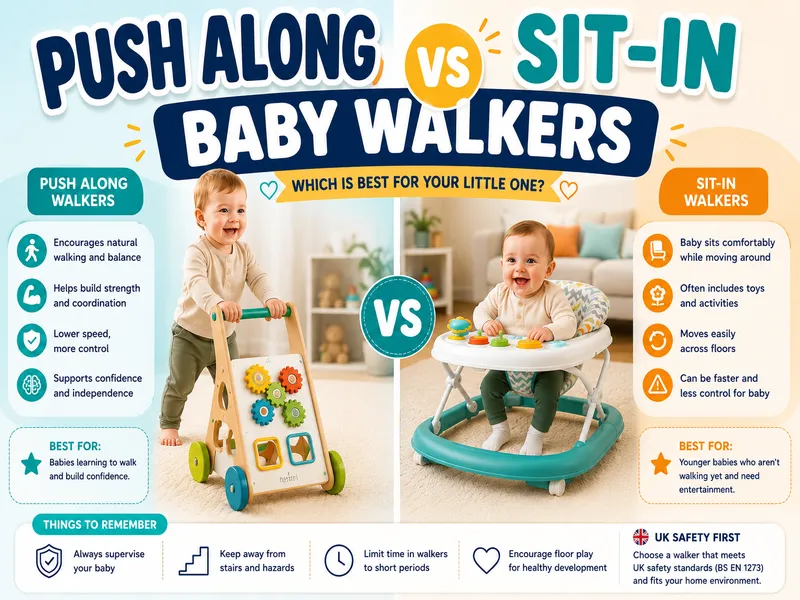
Could choosing a push-along from John Lewis or Argos transform your little one’s balance and independence — or are cosy sit-in walkers secretly slowing your baby’s progress?
You want a safe, fun walker for your little one but aren’t sure whether a push-along wooden or an electronic sit-in activity walker suits your UK home and routine; this guide compares two Amazon UK picks to help you decide.
Balance Builder
You’ll appreciate the combination of a sturdy wooden frame and an engaging activity centre that helps your child practise balance and hand skills. It’s especially well suited to homes with carpets and timber floors across the UK, giving you a quieter, floor-friendly option that’s simple to move and store.
Seat Entertainer
You’ll like the sit-in design if you want an all-in-one activity seat that keeps your baby entertained while giving back support. It’s a practical choice for UK parents who want height adjustment and a detachable play tray, but it’s bulkier and less natural for practising independent walking.
LOL-FUN Push Walker
Red Kite Jive
LOL-FUN Push Walker
Red Kite Jive
LOL-FUN Push Walker
Red Kite Jive
Baby Push Walkers: The BIG Mistake Most Parents Don’t Realize
What These Two Types Do for Your Baby: Development and Use
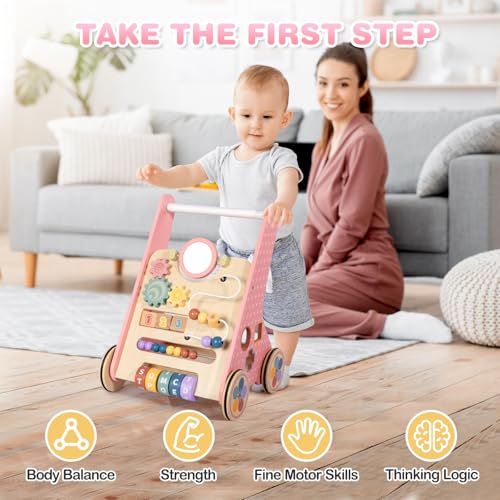
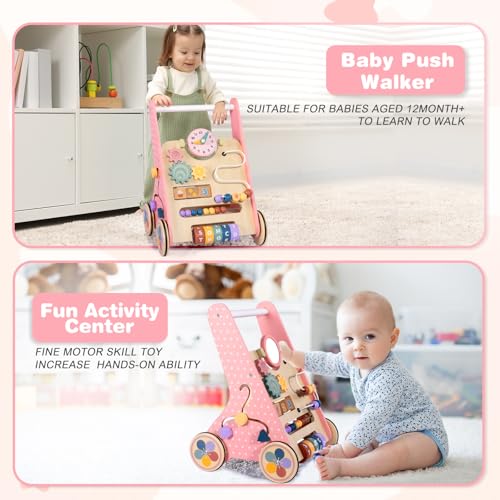
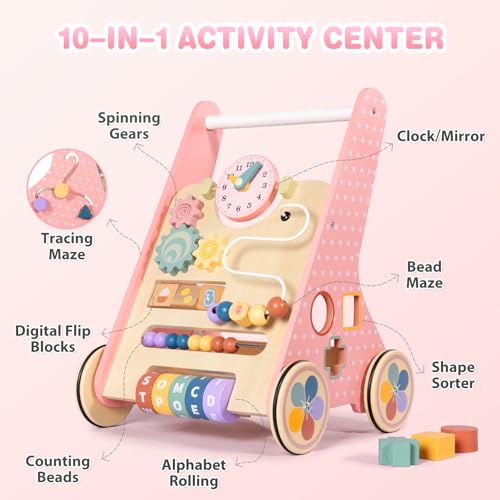
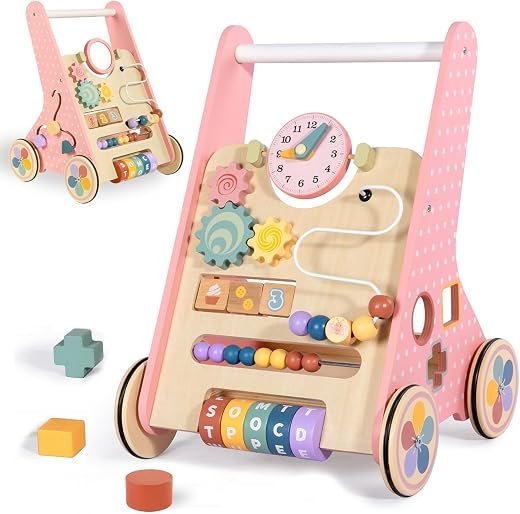
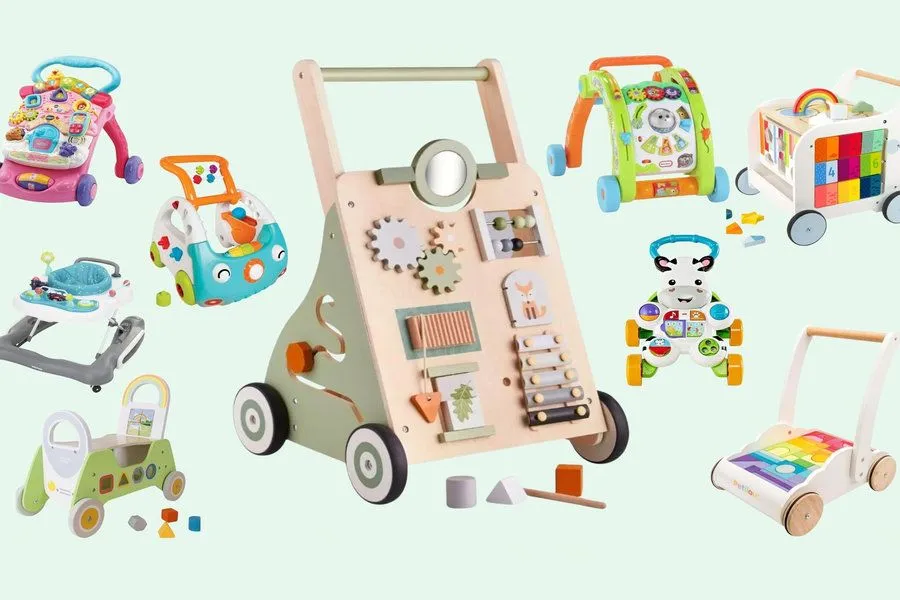
Push-along walkers (like the LOL-FUN wooden model)
Push-along walkers are made for babies who are ready to stand and start cruising — usually around 10–14 months. You’ll find they encourage upright balance and coordinated stepping because your child has to support and move their own weight while holding the handle. A wooden push-along with a built-in activity panel (beads, shape sorters) also trains fine-motor skills and hand–eye coordination while keeping little hands busy during practice.
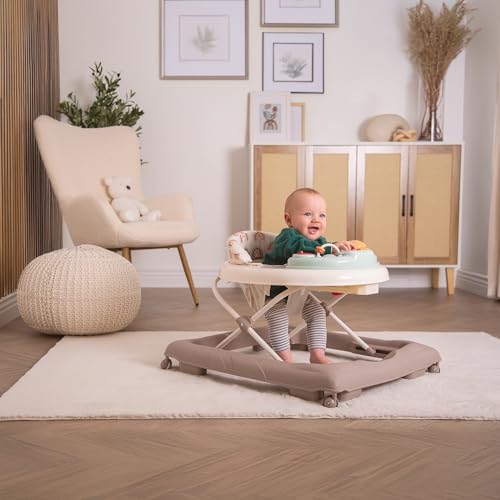
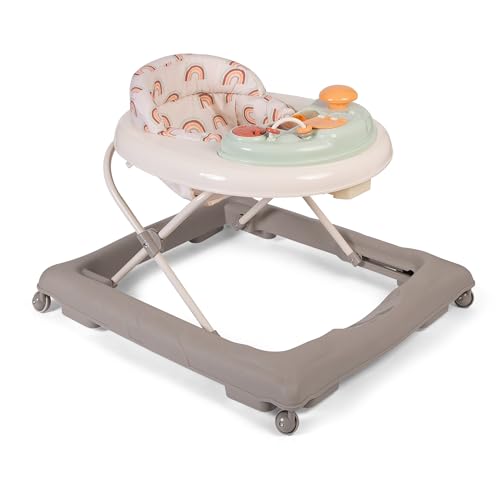
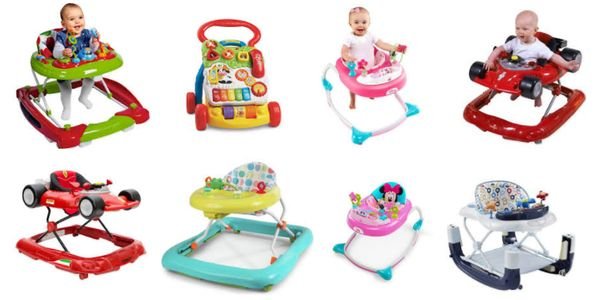
Sit-in / electronic walkers (like the Red Kite Go Round Jive)
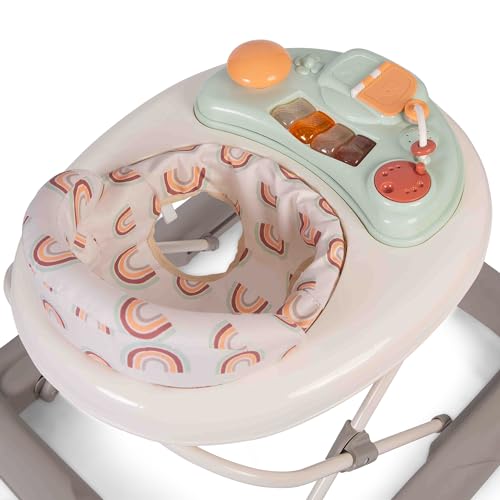
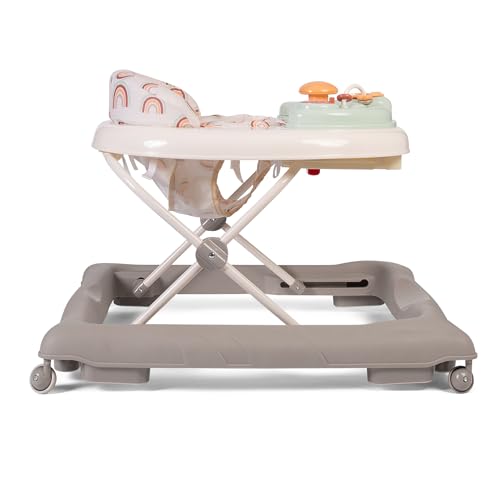
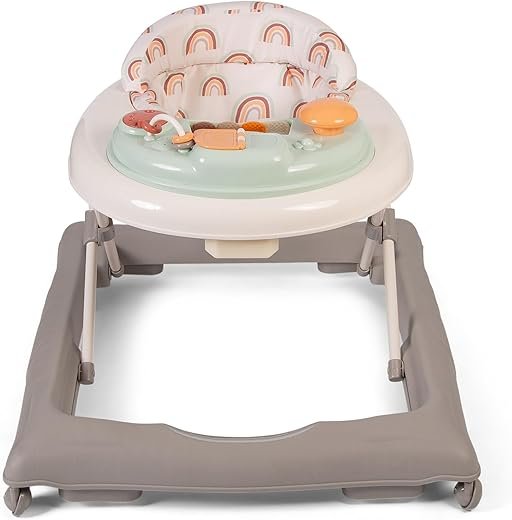
Sit-in electronic walkers suit younger babies (often from around 6 months) who need supported seating and interactive play. The padded seat and height adjustments give back support and a contained place to explore toys. Removable musical trays with lights and sounds are great for sensory stimulation and attention — useful in a nursery or the living room when you need a short play break — but they can distract from practising independent stepping if used as a substitute for floor play.
How each supports development (quick points)
Side-by-Side Features: Design, Safety, and Function
Build and materials
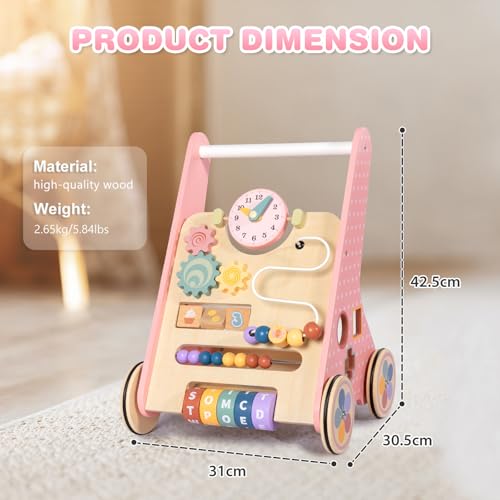
You’ll notice the LOL-FUN is solid wood with a colourful activity panel — smooth edges and non-toxic paint are a plus for UK parents worried about chemical finishes. The Red Kite is moulded plastic with a padded, washable seat and an electronic tray — easy to wipe but the plastic may scuff over time.
Adjustability, fit and how they grow with your child
The LOL-FUN offers a simple wheel-tension option to slow the roll for carpets or hard floors; height adaptability is limited because it’s a push-along rather than a seat. The Red Kite has three height settings and a deep padded seat, so it suits younger babies through early toddling — useful if you want something that lasts through growth stages.
Safety features that matter in the UK
Both models address common UK worries differently:
Stability on carpets and hard floors
You’ll find the wooden walker performs quietly and predictably on low-pile carpets and wooden floors when you tighten the wheels; high-pile carpets will slow it more. The Red Kite’s wider base offers stability on varied surfaces, but its castors can be livelier on polished floors unless the safety base is engaged.
Cleaning, storage and wear
Wood stays attractive long-term and scuffs can be sanded and re-finished; activity parts are durable but not removable for deep wash. Plastic + electronics are easy to wipe and the tray is removable for cleaning, but electronics can fail and plastic may yellow or mark sooner. For small UK flats, the LOL-FUN’s lighter, narrower frame is easier to slot behind a door than the Red Kite’s bulkier frame.
Push Along vs Sit-In: Feature Comparison
Everyday Practicalities: Use, Maintenance and Where to Buy in the UK
Using them around the home
On wooden floors or low‑pile rugs the LOL‑FUN wooden push walker runs quietly, and you can tighten the wheels to slow it on polished floorboards. That makes it a good choice for flats or terraced houses where noise travels. The Red Kite has a wider plastic base and castors that roll easily on hard floors; its electronic play tray adds music and lights, so expect more sound — useful for engagement, less ideal if you have thin floors or sleeping neighbours.
Noise, batteries and day‑to‑day wear
Cleaning and maintenance
Where to buy and price expectations in the UK
You’ll find both on Amazon.co.uk (easy returns), with the LOL‑FUN commonly listed around £30–£40 and the Red Kite around £30–£45 depending on sales. Red Kite walkers are often stocked at high‑street retailers like Argos and sometimes John Lewis, where you can inspect models in person. For lower cost or short‑term needs, check local baby groups, Facebook Marketplace, Gumtree or preloved sites.
Returns and testing
Check each retailer’s return policy before buy: Amazon.co.uk typically offers a 30‑day returns window; Argos and John Lewis usually provide similar or slightly longer return periods. If you’re unsure, test the walker in‑store (where available) or buy from a seller with straightforward returns.
Pros, Cons and Which One Might Suit Your Family
Quick pros & cons — LOL‑FUN wooden push walker
Quick pros & cons — Red Kite sit‑in electronic walker
Which suits common UK scenarios
Pick by age, priorities and budget
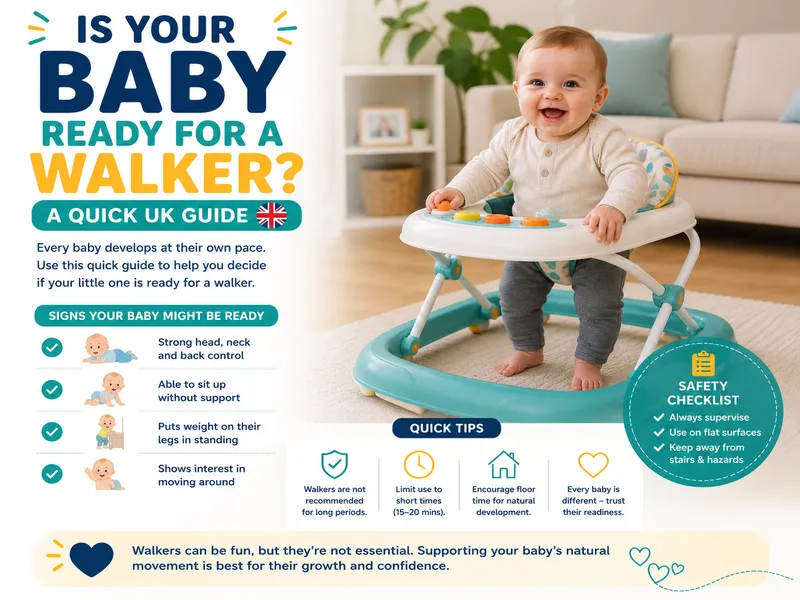
Quick safe‑use tips & UK alternatives
Final Verdict: Which Walker to Pick for Your UK Home
If you want natural materials, simple developmental support and tidy storage for narrow UK hallways and flats, the clear winner is the LOL-FUN wooden push‑along walker. It’s better for confident cruising practice, eco-minded shoppers and compact homes. Pick the Red Kite sit‑in electronic walker if you prefer a busy interactive tray, supervised stationary play and built‑in music.
Consider safety rails, floor space in terraced houses or flats, and whether you prefer rechargeable units or battery-powered toys from Amazon UK, Argos or John Lewis. Ready to decide which suits your nursery?


Hands-on test: the Red Kite’s electronic tray felt a bit flimsy after a month — noticed cracks around the button area. The LOL-FUN walker held up to rough play.
If you have an active toddler, consider build quality over bells and whistles.
Thanks for the real-world report, Lucas. Product longevity is a major deciding factor for many buyers.
Oh no, that’s disappointing. My friend’s Red Kite also showed wear after heavy use. Buyer beware.
I bought the LOL-FUN wooden walker for my niece and it’s been great — sturdy, cute, and she actually uses the activity board when she’s not cruising around. Feels like it will survive sibling play too.
Only drawback: it takes up a bit more floor space than the plastic ones. Worth it for the build quality though.
Thanks for sharing, Emma — glad it’s holding up. Good point about footprint; wooden walkers often need more room but tend to last longer.
How old is your niece? I’m wondering about transition age from push-along to more active walking.
Totally — my sister loved the look but had to move furniture. Still, I’d pick durability over a squeaky toy any day.
I’m a bit wary of sit-in walkers in general. I know some models had safety issues and even recalls in the past. Who wants a walker that encourages tipping or lets a baby reach higher stuff? Not me.
Good concern — many pediatricians recommend avoiding sit-in walkers due to mobility/safety risks. The Red Kite model here is more of an interactive play tray in a sit-in style; always check current safety standards and use on flat, supervised areas.
Yep, agree. My cousin swapped to a stationary activity center instead — less risk, same attention-grabbing toys.
I taught nursery for a couple years and saw both kinds in action. The push-along encourages balance and coordination, while the sit-in gets more fine-motor play (buttons, knobs).
If your aim is motor development: go push-along. If you need a sensory/musical distraction, go Red Kite. No single winner — it depends on the goal.
Could you recommend an age range for each? My kid is 9 months and eager to stand.
That aligns with my experience. Thanks for the nursery perspective!
Great professional insight, Hannah. Framing it by developmental goals helps parents choose intentionally.
Price-wise, wooden push walkers can be pricier up front but seem to hold value and last longer.
If it’s a gift for a first birthday, I’d pick the LOL-FUN for longevity and appearance. If it’s a quick high-impact birthday present, Red Kite’s flashy tray wins for immediate laughs.
Nice summary, Daniel. Gift intent and expected lifespan are important deciding factors — thanks for pointing that out.
Agreed — think about resale or hand-me-down value. Wood tends to get passed down more often.
Aesthetic win for the LOL-FUN. The wood looks nicer in the living room than a bright plastic saucer. Also it doubles as a cute photo prop.
Cons for the Red Kite: so many tiny plastic bits that look like they’ll break. Also batteries. And yes, the shapes are cute but maybe less eco-friendly.
If you want a middle ground, some brands make wooden frames with detachable electronic trays. Worth checking.
Noted. Would pay extra for something that doesn’t scream ‘toys’ in the living room.
Agree on looks — the wooden one blends with our furniture. The Red Kite is a neon spaceship, lol.
Good point about eco-friendliness and home decor. For parents who care about both, wooden options often fit in better.
Safety checklist I used before buying:
– Stable base
– No small detachable parts
– Wheels that don’t swivel out of control
– Weight/age recommended by manufacturer
I ended up preferring the push-along for supervised walking practice. Sit-in was more of a short-term babysitter for us.
Good list — would add checking for non-toxic finishes for wooden toys.
Thanks for listing that — really useful for readers doing quick checks. Supervision is key for any walker type.